Susquehanna, Pennsylvania
Where a nuclear power station and a neighbouring data centre became part of America’s electricity debate.
The place in numbers
- 2 — Operating nuclear reactors
- ~2.5 GW — Combined electrical generating capacity
- 1983 — First reactor entered commercial operation
- ~960 MW — Initial capacity associated with the neighbouring data centre’s nuclear power arrangement
01 — Along the Susquehanna River
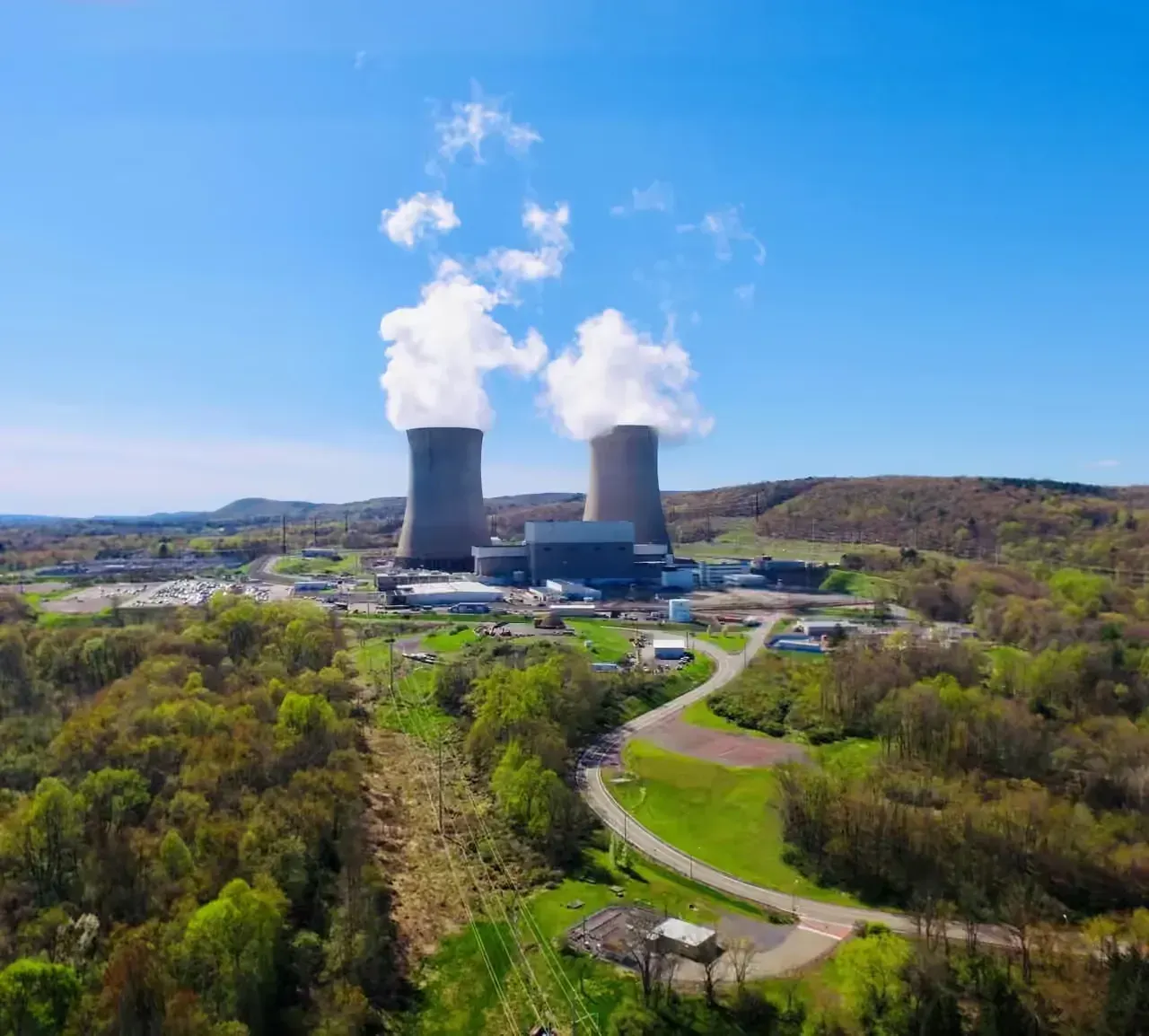
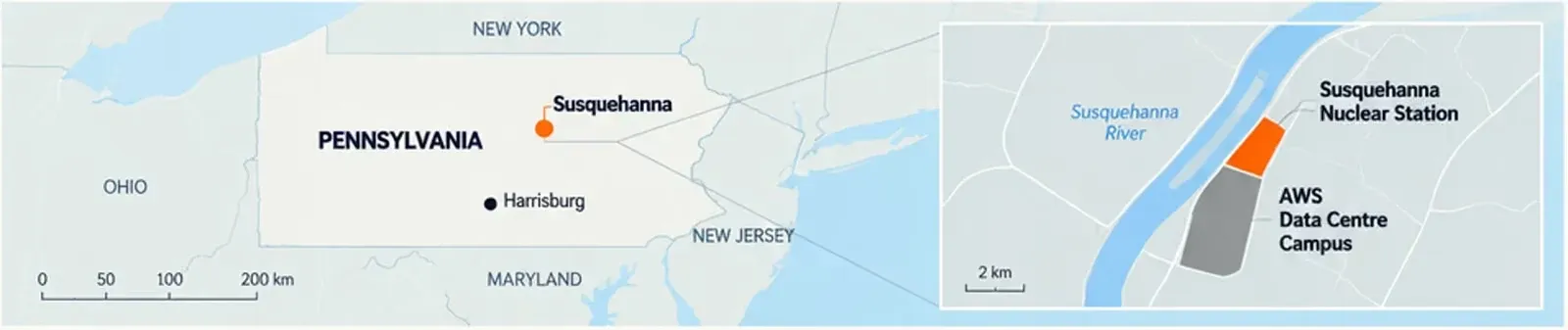
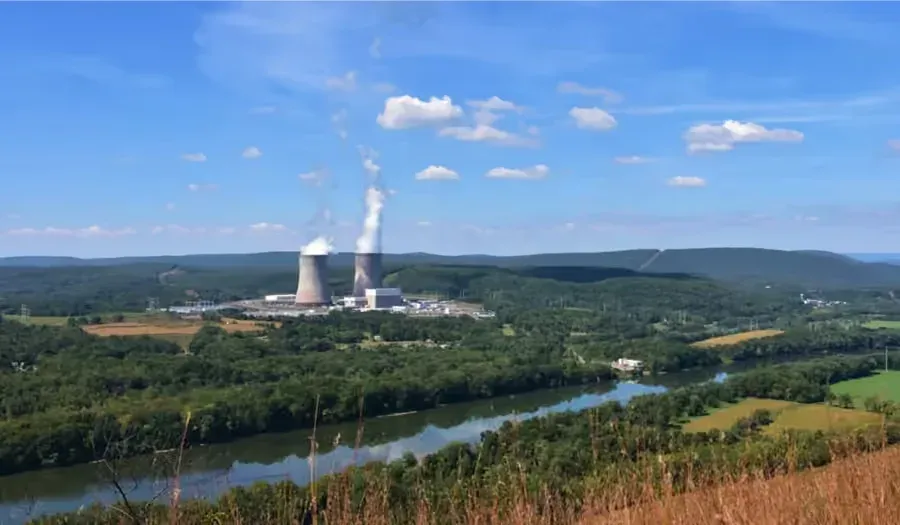
In northeastern Pennsylvania, near the town of Berwick, the Susquehanna Steam Electric Station stands amid wooded hills and farmland overlooking the Susquehanna River.
The location was selected in part for its access to water, essential for cooling a large nuclear power station. Two cooling towers rise above the surrounding landscape, making the facility one of the area’s most recognisable industrial landmarks.
For decades, this stretch of the river has been home to infrastructure supplying electricity far beyond the local communities.
02 — A Nuclear Power Station Meets a Data Centre
Susquehanna’s two boiling water reactors began commercial operation in the 1980s. Together, they provide approximately 2.5 GW of generating capacity, making the station one of the largest nuclear power plants in the United States.
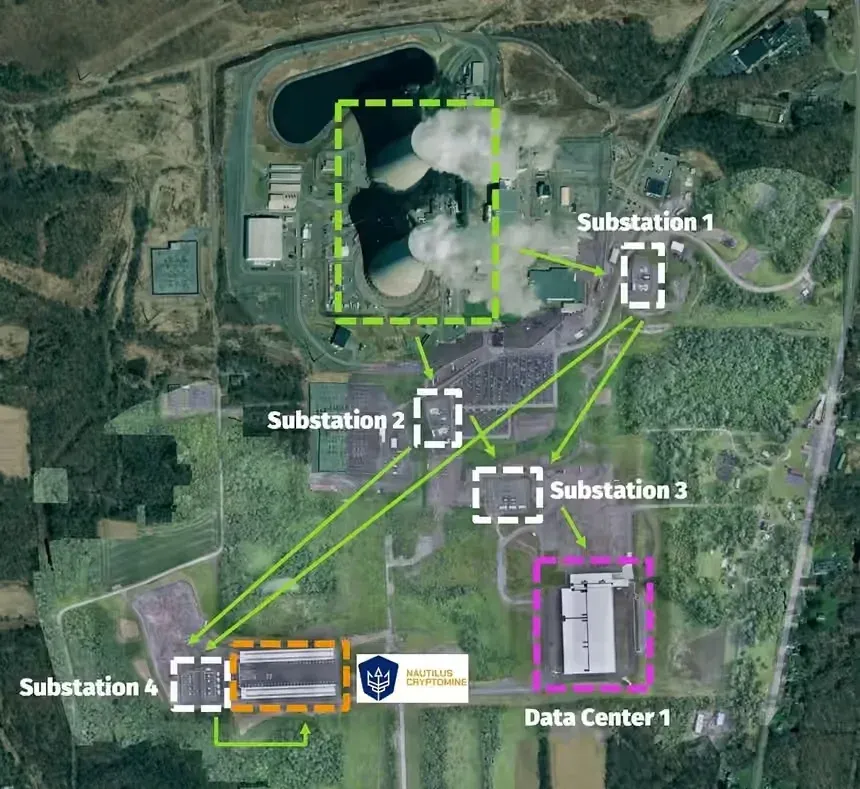
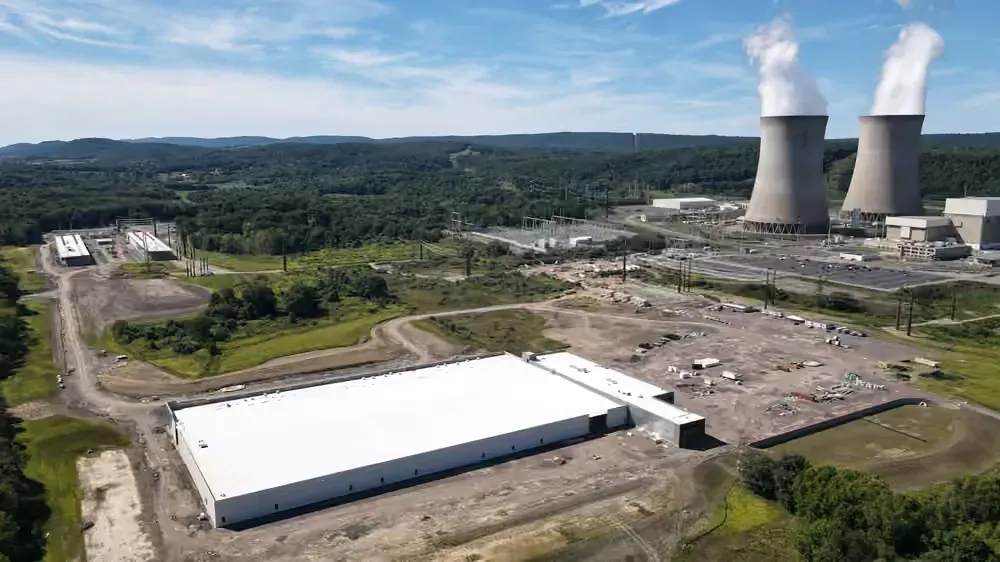
The site’s role began to change with the development of a large data centre campus immediately adjacent to the station. In 2024, Amazon Web Services acquired the campus from Talen Energy, bringing a major technology company directly into the nuclear station’s immediate surroundings.
The proximity of electricity generation and digital infrastructure made Susquehanna an unusual example of two increasingly interconnected industries.
03 — The Grid Connection Question
What distinguishes Susquehanna is not simply the presence of a data centre beside a nuclear power station, but the question of how electricity moves between them.
The campus was developed with infrastructure intended to enable a direct connection to the generating station. However, supplying a large customer outside conventional grid arrangements raised questions about transmission access, costs and the treatment of other electricity consumers.
Regulatory scrutiny subsequently complicated the original plans, demonstrating that physical proximity does not automatically translate into unrestricted access to nuclear generation.
Susquehanna illustrates how the infrastructure required to power the digital economy extends beyond power plants and data centres to the electricity networks connecting them.